Troy Davis's case challenges the credibility of eyewitnesses
Helen of Troy stirred the mythological pot when she ran off with Paris, disrupting the peace in between Sparta and Troy, which eventually resulted in the Trojan War. Her actions highlighted the problems facing her society and caused many to doubt the credibility of the story of her being "abducted" by Paris. Similarly, the execution of Troy Anthony Davis resulted in public outrage and began to cast doubt on the validity and role of eyewitness testimonies.
After spending 22 years in jail, unable to prove his innocence, Davis was executed this past Wednesday for the 1989 murder of Georgia police officer Mark MacPhail. Before Davis's execution, many—including former president Jimmy Carter and former FBI Director and Judge William Sessions—believed Davis was innocent and called for a retrial for a further look into recent evidence. In the end, the Georgia Board of Pardons and Paroles did not reconsider its decision and the U.S. Supreme Court denied Davis's request to delay his execution.

Supporters of Troy Davis rallied in Harlem on Sept. 21. Photo courtesy of worldcantwait.net.
This situation highlights many of the problems that go along with dependence on eyewitness testimonies. The nine witnesses who testified at the original trial convinced the jury that Davis was the murderer. However, since 1996, seven of the nine have recanted part or all of their testimonies, citing pressure from the police as the explanation for what they had previously said. In her 2000 affidavit, Dorothy Ferrell explained that she was on parole for shoplifting and the police pressured her to falsely testify in court. Similarly, Darrell Collins said he was pressured to say that Davis committed the murder or else Collins himself would have been convicted as an accessory to murder. The affidavits of Ferrell and Collins highlight the flaw in using witness testimonies as the basis of a conviction. Despite swearing an oath or making an affirmation, people can lie (and have lied) while they were on the stand, such as Martha Stewart and Bill Clinton.
According to Judge William T. Moore Jr., the 1991 jury presiding over the case said that Davis was guilty "beyond a reasonable doubt." However, according to human rights organization Amnesty International, since 1976, more than 130 people who were originally declared "guilty beyond a reasonable doubt" have been exonerated. There could have even been more, but many of the accused suffered from the unreliability of eyewitness testimonies and did not have DNA evidence to save them.
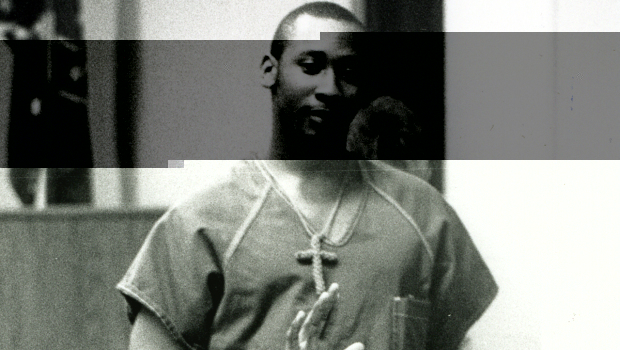
Troy Davis was convicted for the 1989 murder of Officer Mark MacPhail. Photo courtesy of Savannah Morning News.
It's wrong to base the majority of a case on eyewitness testimonies. It shouldn't have been the reason why Johnson served jail time. But it's too late to rewind those years. It's too late to save a potentially innocent man from a sad fate.
Davis died last Wednesday. Guilty or not, he sparked the need for us to reevaluate the justice system's application of eyewitness testimonies. If we do, we may be able to save innocent people from untimely deaths.
Brittany Cheng. <br>Brittany Cheng ('13) served as co-Editor-in-Chief of Silver Chips Online (SCO) with <a href = "http://silverchips.mbhs.edu/staff/698">Langston Taylor</a> during the 2012-2013 school year. During their tenure, Cheng and Taylor led the site's front page makeover with technical staff members Prashan Dharmasena and Jessica Shi, incorporated live-blogging … More »
No comments.
Please ensure that all comments are mature and responsible; they will go through moderation.
