Tags: Obama
February 19, 2009
Executive pay caps are for the best
You don't have to be a corporate accountant to know that executives make more money than the rest of us. This is the way it's always been - and in a way, it makes sense: as a person climbs up the corporate ladder, their responsibilities increase dramatically and their salaries should reflect that. Then again, the earnings of corporate executives may reflect their positions a little too well. According to the Economic Policy Institute, CEOs in 2007 bagged an astonishing 275 times the earnings of average American workers.
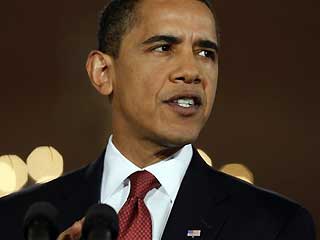
On Feb. 4, President Barack Obama announced a plan to impose executive pay caps of $500,000 annually on any corporation that accepts "exceptional" amounts of bailout money from the federal government.
This dilemma surrounding executives and the money they haul in annually has been puzzling the public for some time. Opponents of exorbitant executive compensation point at the multi-million dollar salaries commonly enjoyed by executives. They ask how this could possibly benefit the company's bottom line, or how this could possibly be justified in a nation where the median household income, according to the United States Census Bureau, is only $50,233. Historically, executives and their corporations have pointed at continuously increasing earnings statements and rising stock prices. They were making money, so something was good was happening. Right?
Well now, as the shattered pieces of our economy crash down around our ears, it's clear that those corporations weren’t exactly making money. Companies everywhere, especially banks, have been hit hard by the lending crisis and are now hemorrhaging capital. Cries for federal bailout money echo across Wall Street and the Fortune 500.
Not so fast, now that Obama’s policy is in play. Although political conservatives may consider the policy just another form of excessive government regulation, this policy is necessary to keep executives from continuing to irresponsibly gorge themselves - this time on public money.
To continue allowing multi-million dollar executive compensation in our current economic climate would be the height of irresponsibility. You'd think corporations so well-versed in self-preservation would understand when to stop giving executives expensive perks. Unfortunately, the system doesn't work that way. Wells Fargo & Co., for example, which accepted $25 billion worth of federal bailout money, recently offered its executives a four-day trip to Las Vegas. Perks used to be distributed as rewards for good performance. Instead, they're being given out even as companies are tanking. Capping executive pay is the only sure way to safeguard the public money flowing into troubled corporations.
Sure, Obama's solution has a number of loopholes. Since the pay caps won't apply retroactively for example, companies that have already accepted money from government bailout initiatives are home free. Changes are certainly needed to make the policy completely airtight, but Obama's proposed policies are certainly a step in the right direction.
The White House's proposed executive pay-cap policy makes financial sense. Picture courtesy of the Associated Press.
On Feb. 4, President Barack Obama announced a plan to impose executive pay caps of $500,000 annually on any corporation that accepts "exceptional" amounts of bailout money from the federal government.
This dilemma surrounding executives and the money they haul in annually has been puzzling the public for some time. Opponents of exorbitant executive compensation point at the multi-million dollar salaries commonly enjoyed by executives. They ask how this could possibly benefit the company's bottom line, or how this could possibly be justified in a nation where the median household income, according to the United States Census Bureau, is only $50,233. Historically, executives and their corporations have pointed at continuously increasing earnings statements and rising stock prices. They were making money, so something was good was happening. Right?
Well now, as the shattered pieces of our economy crash down around our ears, it's clear that those corporations weren’t exactly making money. Companies everywhere, especially banks, have been hit hard by the lending crisis and are now hemorrhaging capital. Cries for federal bailout money echo across Wall Street and the Fortune 500.
Not so fast, now that Obama’s policy is in play. Although political conservatives may consider the policy just another form of excessive government regulation, this policy is necessary to keep executives from continuing to irresponsibly gorge themselves - this time on public money.
To continue allowing multi-million dollar executive compensation in our current economic climate would be the height of irresponsibility. You'd think corporations so well-versed in self-preservation would understand when to stop giving executives expensive perks. Unfortunately, the system doesn't work that way. Wells Fargo & Co., for example, which accepted $25 billion worth of federal bailout money, recently offered its executives a four-day trip to Las Vegas. Perks used to be distributed as rewards for good performance. Instead, they're being given out even as companies are tanking. Capping executive pay is the only sure way to safeguard the public money flowing into troubled corporations.
Sure, Obama's solution has a number of loopholes. Since the pay caps won't apply retroactively for example, companies that have already accepted money from government bailout initiatives are home free. Changes are certainly needed to make the policy completely airtight, but Obama's proposed policies are certainly a step in the right direction.


Digg
del.icio.us
StumbleUpon
reddit
Facebook
Discuss this Article
Actually, political conservatives are asking why we are paying these shysters' salaries in the first place, not why we're regulating how much we give them. These executives gambled with their companies and lost. Instead of going bankrupt, the government has promised over $8 TRILLION of public funds in these bailouts. We have already doled out $1.4 TRILLION to failed companies, but has it done any good? The line for free money from the government just gets longer every day. This is Matthew Lesko's dream come true. Look at TARP. The government is buying $700 billion in illiquid assets (that is to say, overvalued assets). This sort of price control simply doesn't work. Ch-ch-ch-check it: http://www.youtube.com/watch?v=dv6rQ0U01Yc . He tried to warn us, but the damage has already been done. We've seen the first $350 billion from TARP fail, so we're throwing $350 billion more at it! This doesn't strike me as a fair or sound economic decision.
The bailouts just don't make economic sense. While I agree that capping our handouts to these executives at $500,000 is better than no limit at all, the real question is why we are footing the bill for corporate failures that are not our fault!
We found out decades ago that the classical laissez-faire model of economics wasn't at all correct. Though even the most expert economists still aren't sure exactly what's happening in our economy, those who know and study problems like this all agree that what the US government is doing is more or less the best way to ensure recovery. And despite what Bobby Jindal might have to say, the old conservative policies that have failed us in the past aren't what we want to follow today.