Side Bar

October 1, 2009

Too many variables to be valid

Amir Gorjifard, Staff Writer
When an Indian medical journal showed that a trial for an HIV vaccine has shown promising results, headlines across the nation presumed that a vaccine has been discovered. Initially it felt that finally a cure for the disease that has claimed more than 25 million lives worldwide came into fruition. However, before the world claims these findings as a milestone, we must take a closer look at the research methods used to test the vaccinations.

The positive outcome of the vaccine was a part of the Thailand AIDS Vaccine trial (RV 144), established by the AIDS Society of India (ASI).
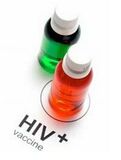
Some are jumping to the conclusion that the new HIV vaccine is a cure without knowing all the facts. Picture courtesy of Healthscape.
The six-year trial was established as a single blind study where half of the 16,395 participants were given placebos, while the other half was given RV 144 test vaccines. At the end of the trial, 74 patients of the placebo group were diagnosed with the HIV virus, while only 51 patients of the vaccine group were diagnosed. Although this trial, the first of 96 HIV vaccine trials to come, has been hailed as a medical achievement, the positive results are more misleading than they seem.

Even the ASI warns the public that the results of the experiment may have minimal practical benefit in the medical future. The plethora of variables in the experiment portrays the positive outcome as more of a fluke than an actual medical achievement. The Secretary General of the ASI, Doctor IshwarGilada speculates that a reason for the outcome of the experiment could be that "people are used to risk-taking behavior under the false sense of security of the impending HIV vaccine," meaning that the participants in the experiments assumed that the vaccine given was an actual prevention of HIV that warranted them to freely engage in dangerous activities that could have lead to contracting the virus.

HIV/AIDS research should only be performed in a situation of lab studies. Lab studies allow scientists to know all the variables existing in their research. A natural observation of over 16,000 participants leads to countless factors that skews the data and negates an irrefutable vaccine. When positive results from a truly genuine experimental procedure are seen, then that is when a HIV/AIDS vaccine milestone has been reached. Until then, we still have a long way to go.
Digg del.icio.us StumbleUpon reddit Facebook

Discuss this Article

  • Ken on October 1, 2009 at 10:11 PM
    The challenges between field trials and laboratory studies are real and difficult to fully control. The writer is correct in stating that lab trials are more controlled. But, at the same time, vaccines that work in the lab but show less effectiveness under real world conditions may be of little use. Both lab and field studies are required to reach valid conclusions. The challenge is to conduct field trials in as careful a way as possible so that many of the potentially confounding variables can be (at least) partially controlled. The writers conclusion, while longing for control and a definitive solution, is just not how things work. Unfortunate, but a reality we must learn to live with.
  • Eli Barnett on October 2, 2009 at 8:48 AM
    As much as a true double-blind well-controlled lab study would be nice, it also raises the moral implications of giving people AIDS. Good luck finding volunteers.
  • asdf on October 2, 2009 at 10:10 AM
    Doing a "lab study" (I presume you mean experiment, since you talk about knowing all variables) is all very well, but there would be some rather large practical and ethical issues. For example, how would you expose the people involved to HIV if you're trying to control all the variables? Would you inject them with the virus? To me it seems that it would be extremely hard to conduct an actual experiment on how well this vaccine works.
  • student on October 2, 2009 at 8:53 PM
    I disagree. It is ridiculous to cite "too many variables" as the reason to discredit a thorough and well-designed study. In almost all statistical studies, there will be many variables. However, these variables can be accounted for by random assignment of treatments, which would equalize the effects of outside variables. Additionally, the experiment used a placebo, so all of the participants believed they were receiving the vaccine. Therefore, "risk-taking behavior under the false sense of security of the impending HIV vaccine" would not skew the results of the study, since the two groups would be affected equally by this false sense of security. Moreover, the validity of the experiment is supported by its large sample size. With 16,395 participants, the Thailand AIDS Vaccine trial study is considered the world's largest HIV vaccine trial. It is unlikely that, with such an enormous sample size, the results are just a “fluke.”
  • yeah.. on October 3, 2009 at 5:29 PM
    this vaccine is not yet worthwhile, since it is only 31% effective. in comparison, circumcision is 60% effective while condom use can be 95%+ effective.
Leave a Comment